A New Day in Hair Care

    In the Black community, we take great pride in presenting ourselves to the world in unique ways that feel good. Whether honoring ancestral traditions or innovating with new styles, our fashion reflects the complexity of our essence and culture. Due to the unique textures on one head alone, styling and maintenance can be a challenge in this increasingly busy world of ours. A  variety of hair extensions and wigs offer stress-free and low-maintenance options that protect the hair while offering new and exciting opportunities to change things up.  

    Today, we express ourselves freely, though it comes with a hefty price tag. Oftentimes, cultural expression has been viewed as a threat in times of social unrest, leaving people afraid to live. The Louisiana Tignon Law of 1786 is a perfect example of how our skin, hair, and clothes have been the center of much speculation and policing; arguably, since time immemorial.  With similar laws sweeping the nation and even the world, we have still found ways to innovate and celebrate our uniqueness. Thankfully, we've evaded the times when our style was ordained by law, despite some residual judgment from loved ones and colleagues alike. Being that our mere existence has caused such a frenzy for centuries, Black women continue to show up boldly, loving ourselves and encouraging others to do the same!

A Hair Care Crisis

    After we appeared to master the art of self-expression with vibrant hair colors and styles, elaborate nails, and accessories to match, a new storm was brewing. Recent studies have found that some of these beloved beauty enhancements come with a plethora of side effects. Braiding hair has allowed Black women to get creative with their braided and twisted hairstyles. Relaxers have been popular for decades, making our hair more “manageable” for daily wear and styling. But after a National Institute of Health (NIH) 2022 study found that several popular relaxer brands contained carcinogens, their reliability came into question. There is an ongoing class action lawsuit, and we’ve seen a subsequent rise in natural hair styling options.  

    However, this new search for trusted hair styling go-tos has come with some murky discoveries. While many women have returned to natural hairstyles, hair wefts and extensions have soared in popularity. According to a Consumer Reports study, 100% of the braiding hair tested on the market was found to contain cancer-causing and hormone-disrupting chemicals. With many women, again, of all races, donning these extensions for several hours, multiple times a week, if not for weeks on end, they are blindly participating in the deterioration of their health. 

One of many setups used at a salon to make the styling go smoother for both client and stylist.

    Fortunately,  since 2020 alone, several women entrepreneurs have risen, entering the STEM field to formulate healthier synthetic hair alternatives and reclaim ownership in the hair industry. With beauty and hair care being such fundamental parts of self-care for Black women, we make up approximately 12% of beauty industry revenue, with only about 2% of brands being by and for Black consumers. These women, however, have taken a stand to bridge these economic gaps and improve synthetic hair quality for all. 

The Brands Reshaping the Hair Industry

    Tare Robinson Korumene of Nigeria has been turning plantain stems into beautiful and silky hair extensions under her growing startup, DUNNALLY Hair. Her products sell for about $7/pack though they are priced in naira, the currency used in her home of Nigeria. Korumene is adamant in her call to action, encouraging us to not only make the more sustainable choice for our health, but to improve our economic standing by supporting our communities. Robinson’s company, ECO Fip, also features eco-friendly textiles made from the same materials, showcasing the limitless potential of her sustainable goods. 

    The Rebundle brand by Ciara Imani May features the braidBetter product, offering customers several color options of plant-based and hypoallergenic synthetic hair. The site is filled with exciting tips and resources for hairstylists and clients alike. The Rebundle products are made from the fibers of banana stems, creating a durable and silky extension that rivals some of the highest quality human hair. With bundles starting at $36/pack, they are washable and reusable, making these well worth the investment. 

    Liliana Augusta of Liliana Augusta Beauty, or LAB, is on a similar mission to bring sustainable, plant-based, and affordable bundles of hair to the masses. Her Hair Without Harm features several colors of synthetic braiding hair starting at $30/bundle, free of plastics, chemicals, and animal byproducts. 

A woman is seated, getting extensions added to her hair in a twisted style.

    The Nourie brand goes a step beyond the traditional practice of coating synthetic hair in harmful chemicals that damage the hair and scalp. Instead, Nourie has coated their tresses in plant-derived ingredients that actually nourish the scalp, supporting long-term hair health. These 2-pack bundles start at $32 with an emphasis on low-heat, braiding, and twisting techniques.  

Ruka hair is another synthetic braiding hair that has been formulated by Black scientists without the harmful chemicals used in traditional braiding hair. Ruka features hair care products and sets of braiding hair starting at $16/pack. The brand also has a selection of clip-ins, wigs, and hair bundles ranging from $130 - $478. Deeply rooted in cultural dignity and the sustainable future of Black hair care, Ruka offers consumers safe and culturally relevant solutions.  
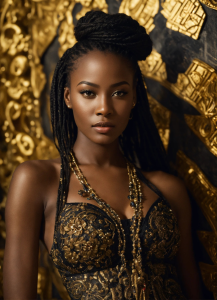
    The Slayyy hair brand, by Diann Valentine, is a super affordable option available at several national retailers and in their digital store. Valentine’s product takes synthetic hair and, using her Slayyy Secret Sauce, processes it in a much safer and healthier way, leaving braiders and their clients with colorful, lightweight, irritation-free hair to suit their style needs. At about $7 a pack, the Slayyy extensions make safer haircare more affordable. 

With several brands on the rise with a shared mission to improve hair care quality, the future of hair care is in good hands.

Phicil-itating Change with Sheila Phicil

With years of experience in health care, most recently at Boston Medical Center (BMC), Sheila Phicil has recently switched gears, paving her own unique path to modernizing healthcare. As the former Director of Innovation for the Health Equity Accelerator at BMC, Phicil organized and interpreted patient data in order to seek ways to center patients and their unique needs.

Sheila holds a dual Master’s degree in Public Health and Financial Economics, is a Certified Project Management Professional (PMP), and a Fellow of the American College of Healthcare Executives (FACHE).

As a “social change futurist” and former “intrapeneur,” Sheila brings her unique skills to existing data collection systems by addressing racial health disparities. Like an entrepreneur, an intrapreneur is a self-led member of a larger organization, such as BMC. Through trial and error, several hospitals nationwide have adopted the same initiatives that Phicil helped onboard. She has spent the last few months sharing her expertise and guidance with healthcare facilities across the nation.

 Her hands-on, interpersonal connections with patients, caregivers, and medical professionals have led her to create a niche product of her own to advance healthcare on a global scale. 


The Woman Behind the Innovation

 As a Black woman of Haitian descent, Phicil shared how she’s witnessed the potential for science and technology to “provide the change needed for social change.” Scientific processes often help actualize the socioeconomic outcries we have experienced over countless years, quantifying them and bringing these experiences to life. With greater accessibility to education and opportunities, more people are getting a chance to enter the science field and ask meaningful questions that embody the facts of life. 

 Staying grounded amidst navigating and deciphering the minutiae of this patient data is vital. Sheila creates a balance between her work and her well-being by enjoying time in nature, soaking up the sun, and traveling. She also actively checks her perception and privilege to embrace deeper expansion and understanding of herself and the complex world around her. She is also sure to set boundaries between her work and personal life.

Life as a Social Change Futurist 

Sheila’s multifaceted venture, Phicil-itate Change is an innovation studio that brings high-potential healthcare concepts and radically patient-centered solutions to life. Following their SEEDS Framework, the team supports fellow healthcare innovators, patients, and venture studios. The innovation studio is rooted in bringing real-life solutions to everyday people that will improve the medical experience on all fronts. With countless hours of dedication and expertise applied to the project, the team is building a platform to ensure a sustainable, actionable, and effective product for both patients and healthcare providers.

While collecting data in a broad sense can be helpful, Sheila’s program will help humanize the data and numbers collected in different forms and files in healthcare offices. Providing deeper insights into each patient will allow healthcare startups to offer resources that encourage advancement and wellness for each person. The team’s flagship product, the COMPASS Project, brings these features together in an AI-powered platform. The COMPASS Project paints a clear picture of the powerful potential when innovation meets human empathy and care. 

The Inspiration Behind the Work

“Why are they in that circumstance and I’m not?” echoed through Sheila’s young mind when she saw the sad commercials of starving children back in the early 1990s. As a true community beacon, Sheila spent much of her youth organizing and working with diverse groups of people to meet common goals. She’s always found inspiration and wisdom from the guidance and collaboration with teachers, colleagues, and patients alike. Since supporting her younger siblings and honoring the ways of her parents as a young girl, Sheila Phicil has grown into a nurturing and harmonizing force, driven to bring as many people along with her towards a brighter, healthier future.

She was particularly inspired by a 10-day mission trip to Haiti in her early college days. After visiting the island to disperse medical supplies, such as wheelchairs, prosthetics, and crutches to locals in need, she discovered several discrepancies. Despite the organization’s kind-hearted efforts, speaking to the locals individually revealed unique challenges that these well-intended resources merely exacerbated. 

A majority of the locals traveled across various terrains to get supplies. Before she left, a surprising number of items were returned. Her team members were hurt and confused, but being the only Haitian-Creole speaker present helped her communicate with the locals in greater depth. These deeper, personal conversations revealed that many of the locals couldn’t use the supplies in their daily lives, so continuing without them was easier. Rather than being ungrateful or ignorant of the use of the items, the team simply didn’t supply what the locals needed. This revelation sparked a deep awakening in Sheila that has since shaped her work to facilitate greater change. 

With many active components to her work, Sheila is set to make big and lasting changes in the field of healthcare innovation. We look forward to seeing how Phicil-itate Change continues to grow and foster deeper trust in the healthcare system.

Chiderah Okoye: Transforming Power Systems

Chiderah Okoye was raised in a world of science through the love and legacy of her family. She was always inspired and encouraged to improve the lives of others through science and technology. She grew up in Maryland, surrounded by empowered women in healthcare. Chiderah naturally developed a stronghold in STEM early on. 

Chiderah’s Early Years

In middle school, Chiderah decided to become a biomedical engineer, gaining instant encouragement from loved ones to ensure her success. In high school, her mother connected her with a doctor from Case Western Reserve University - renowned for its biomedical program. Her mother, who never drove long distances, left her apprehension in the backseat when she personally escorted her daughter from Maryland to Cleveland for the program. Chiderah’s family paved her way in gold, gifting her a beautifully planned roadmap, sealed with love. Look at how far she’s come! 

Chiderah Okoye looking fabulous in a headshot.

Early in her career, she spent much of her time sharing her resources and expertise in her community while deepening her involvement in STEM programs with a tangible social impact. Through the National Black Society of Engineers  (NBSE)  conference, she connected with Rockwell Automation where she would go on to shift career paths again. There she saw how the company solved business problems for companies of all sizes by designing and deploying systems for manufacturing and information operations. While this emerged as a passion, the NBSE’s call to “positively impact the community” led her to find ways that she could identify and solve business and community needs as well.

In her early college studies and beyond, Chiderah has remained an avid student. She actively learns from and appreciates the perspectives of her peers, mentors, and the world around her. 

Transform Power Systems

Today, Chiderah has shifted her focus by creating solutions for business and community challenges in the clean energy sector. Transform Power Systems (TPS) is Chiderah’s latest venture. On one end, the organization designs and deploys power distribution and renewable energy systems to help businesses and communities meet their sustainability objectives. More recently, TPS has launched its Workforce Hub, rooted in training and placing emerging leaders in clean energy careers. 

With rising concerns about the climate crisis, the TPS Workforce Hub programming allows adults across different educational, skill, and career experiences to join the frontlines of creating a sustainable future. Not only will selected participants grow and transfer their skills, but they also earn generous stipends while they learn! 

The TPS Workforce Hub offers two core programs:

TPS Clean Energy Fellowship 

This program is for professionals with degrees looking to apply their skills in the clean energy sector. Our program helps fellows: 

The intensive upskilling curriculum grants fellows the opportunity to:

Adult Mobilization Program (AMP) 

This program is for individuals with prior work experience who have not obtained a college degree. Participants receive several opportunities for training and growth through; 

Chiderah and her team have a huge vision for the impact the TPS Workforce Hub can have in advancing Massachusetts's sustainable future. In this startup phase, TPS continues to garner the support needed to bring this program to its full potential. 

As Chiderah’s World Turns

In the spare time that she has between family life, work, research, community service, and studying, Chiderah has had to prioritize her wellness to maintain all that she is navigating. She has gone from regularly teetering on the edge of burnout to becoming a vocal advocate for her restoration. Her work days incorporate daily walks and “silent/screenless meals” to make sure she stays grounded. Chiderah prides herself on the strides she’s made to compartmentalize her work and home life, making for a more fulfilling experience for herself and her loved ones. 

We need clean energy for a brighter future. Everything we do requires energy to function; from the water we drink to the phone charging by the bed. Transform Power Systems (TPS) plays a unique role in creating greater job retention and sustainability for an up-and-coming generation of professionals. From expanding the program to spreading the word about clean energy initiatives to local communities, we look forward to seeing all that TPS has to offer.

The Legacy of Black Women in STEM

From barbaric medical practices to outright plagiarism and theft, modern science carries a dark history. Modern science hasn’t always offered the most fair playing ground for women, people of color, or the disabled. Oftentimes they would either be tortured, stolen from, or ultimately abused in the name of innovation. The notion of race itself and the prejudices that come with it are based on the “science” of eugenics. However, science has also allowed us to have clean drinking water, life-saving medical interventions, and working electricity among so many other things. Despite this ever-present dichotomy in the science world, it is clear that to move forward as a society, we have to be willing to make those advancements together. 

Mary Kenner along with an image of the sanitary napkins based on her designs. Image courtesy of Vocal Media.

Black women have made significant contributions to STEM throughout history. Unfortunately, many of these key players in the advancements of STEM have been overlooked due to systemic barriers based on prejudice and discrimination. With brighter hearts and more open minds, science has the power to present the evidence and solutions needed to face social issues head-on.

This Black History Month, we highlight both historical and modern pioneers who've made a way where there was none. We thank these women named and unnamed who have opened the door for advancements in STEM that benefit all people, regardless of race, class, or gender.

Historical Trailblazers

Though we can only list so many, we just want to take the time to honor all of the Black women, known and unknown, whose minds have contributed to science and technology. 

Katherine Johnson,  Dorothy Vaughan, Christine Darden & Mary Jackson were pivotal members of NASA during the Apollo mission in 1969. Starting in the early 50s’ these women were a pivotal group of mathematicians, engineers, and leaders whose careful calculations made the success of the Apollo mission possible.  


Mary Beatrice Davidson Kenner received very little recognition for her monumental contribution to global menstrual care. With a patented design, Kenner engineered an improved menstrual pad, making menstrual more accessible, convenient, and sanitary.

Dr. Marie Maynard Daly was the first Black woman in the U.S. to earn a PhD in chemistry. Her research on hypertension and cardiovascular disease shaped modern medicine for the disorders. 

Not only did these women brave the frontlines of social change in America, but they graced our nation with the expertise and efforts that have made this great nation possible.

Modern STEM Leaders Conquering Challenges

Dr. Ayana Howard is pictured with a super cute robot, courtesy of Silicon Valley Robotics.

Today, there is a long list of Black women who continue to carry the torch of their foremothers in the STEM world. Though the future may seem daunting at times, these women are continuing to boldly step forward with their ideas and solutions.

Dr. Ayana Howard is an expert in AI and robotics, advancing ethical tech and accessibility. Her work addresses the pros and cons of the rapidly advancing world of AI and robotics. Dr. Howard’s expertise helps to ensure a safer experience with AI and robots for all.

Dr. Jedidah Isler is the first Black woman to earn a PhD in astrophysics from Yale in 2014. With outer space holding a special place in her heart, Dr. Isler is currently researching high-energy observational astrophysics.

Dr. Jedidah Isler speaks on the TED Talk stage.

Alexis Williams is one of many of us who were affected by the police brutality events of the last decade. However, Alexis took matters into her own hands and created a web-based database that offers resources for allies, survivors, victims, and their families called Police Brutality Resources (PBR).

According to the National Science Foundation’s 2023 report, Black women and our marginalized counterparts still have a bit of distance to go before we achieve greater equity in the sciences.

Some of the greatest challenges of increasing representation in STEM include:

Alexis Williams, founder of Police Brutality Resources (PBR), courtesy of Pulse Spikes.

By improving representation and access to STEM opportunities, more people are getting a chance to see themselves as scientists. Though the task may seem daunting, we can achieve these goals.

Inspirational women like Dr. Howard and Alexis Williams took matters into their own hands by identifying significant problems and creating lasting solutions. We also are in a time when children are seeing a colorful array of people in a variety of professions; giving them a chance to consider astronomical possibilities for their futures. This early exposure can potentially encourage the younger generations to have a natural inclination towards STEM, given that it is truly a world of possibility on its own.

Despite the divisive adults that run things, children today are being raised in a world that is actively working toward honoring diversity for the gift and privilege that it is. A few years down the road, creating inclusive environments for all to thrive will be second nature. 

Looking Ahead: A Communal Effort 

By working together, we can ensure that all who are marginalized receive the opportunities, justice, and respect that they deserve.  We must stay committed to amplifying each others’ voices and ensuring better opportunities; we will only be stronger for it.